An Image of Quiet Resurrection
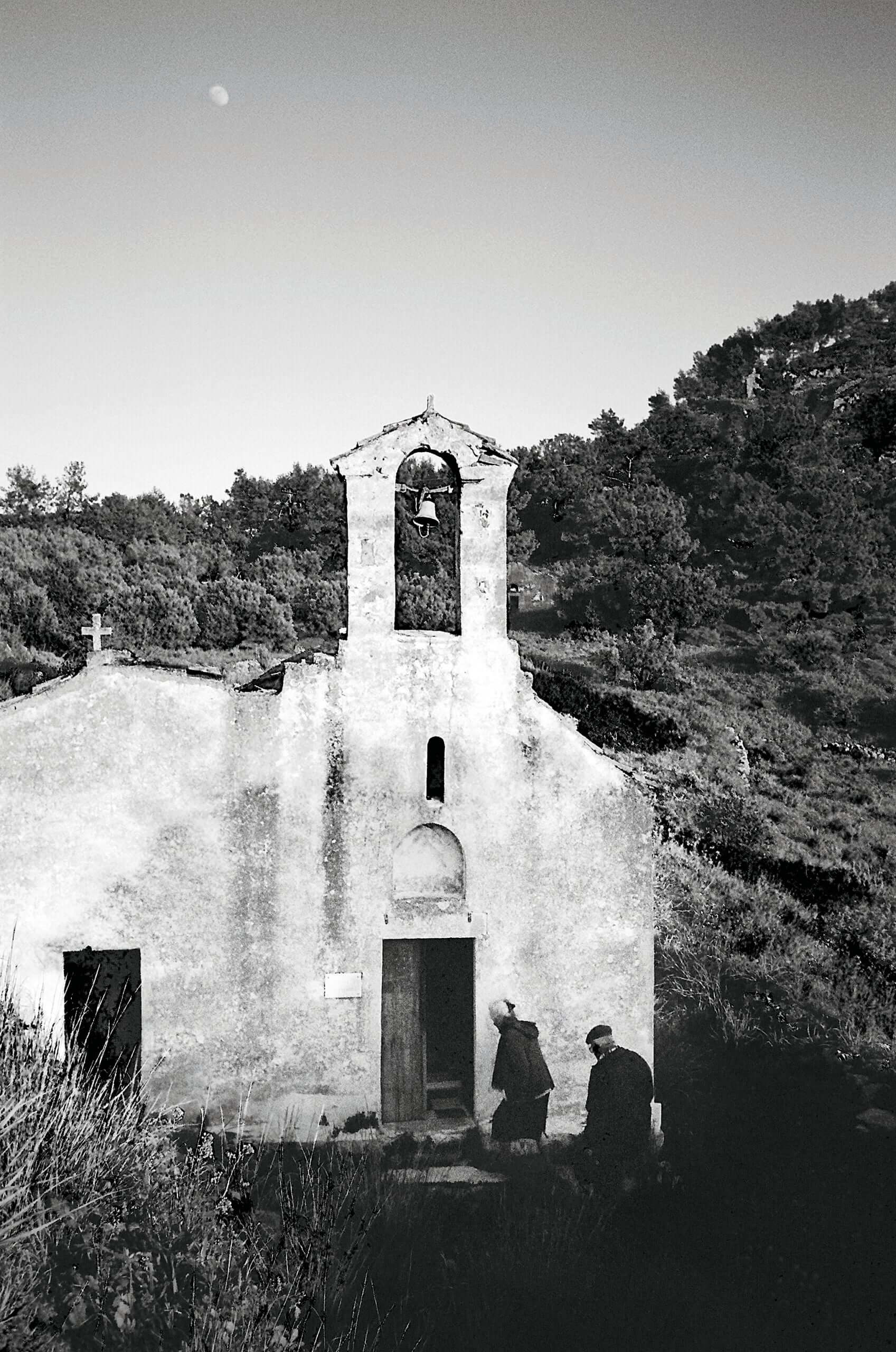
When I first captured this photograph, I wasn’t thinking about publication, let alone seeing it featured in Kathimerini. It was simply a moment—one of those fleeting instances where light, place, and feeling align almost without permission. Yet, within the context of the article “Easter Brought an Inner Resurrection,” the image found a deeper voice.
The photograph, originally published in the Myrmidones book and in landscapes collection, carries with it a quiet narrative: a pilgrimage not just across landscape, but inward. The scene, an elderly couple moving toward a small rural church of Agios Charalampos in Palaia Chora of Aegina, echoes a timeless rhythm of faith and continuity. Their presence feels almost symbolic, embodying a lived spirituality that is neither dramatic nor performative, but deeply rooted in everyday gestures.
This image is also part of a broader exploration within my artistic practice—an ongoing series that reflects on faith, not as doctrine, but as lived experience. Through my work, I return often to questions of belief, ritual, and the subtle ways spirituality manifests in ordinary life. I’m drawn to moments where the sacred quietly intersects with the everyday: a gesture, a pause, a shared silence. These fragments, though small, hold a profound emotional and symbolic weight.
What struck me most, seeing the image reframed within this article, was how it resonated with the idea of “inner resurrection.” Not the loud celebration often associated with Easter, but the subtle transformation that unfolds in silence. The kind that happens in shared glances, in slow steps, in the weight of memory carried gently forward.
Photography, at its best, does not explain—it reveals. In this case, the image became part of a broader conversation about sacredness, touch, and human connection. It aligned with reflections on how the spiritual is often encountered not in grand declarations, but in moments of attention and care.
To see my work included in this narrative is both humbling and affirming. It reminds me that images live multiple lives: first as personal encounters, then as shared experiences. And sometimes, unexpectedly, they become part of something larger—a collective reflection on what it means to pause, to feel, and perhaps, to begin again.

Light & Honey - The World of B LOUIS
On the island of Aegina, where thyme grows wild under the intense Greek sun and the scent of Mediterranean herbs travels through the hills with the wind, a young couple has chosen to follow a demanding but deeply rewarding path: the creation of exceptional organic honey. Their brand, B LOUIS, is still relatively young, yet it has already earned recognition in the world of Greek gastronomy. Their honey has been honored at the Great Taste Awards and selected as a finalist in the honey tasting of Gastronomos magazine—an important distinction in a country where honey production has deep historical roots.
B LOUIS represents a new generation of Greek producers who combine respect for traditional beekeeping with a contemporary vision of quality, sustainability, and careful branding. Their honey is certified organic, produced with great attention to environmental balance and the natural rhythms of the island ecosystem. The bees forage among thyme and other aromatic Mediterranean herbs that grow naturally on the slopes of Aegina, giving the honey its distinctive character.
Aegina’s landscape plays a central role in the story. The island’s dry terrain, rocky hills, and scattered vegetation form a unique environment where aromatic herbs flourish under the strong Aegean sunlight.
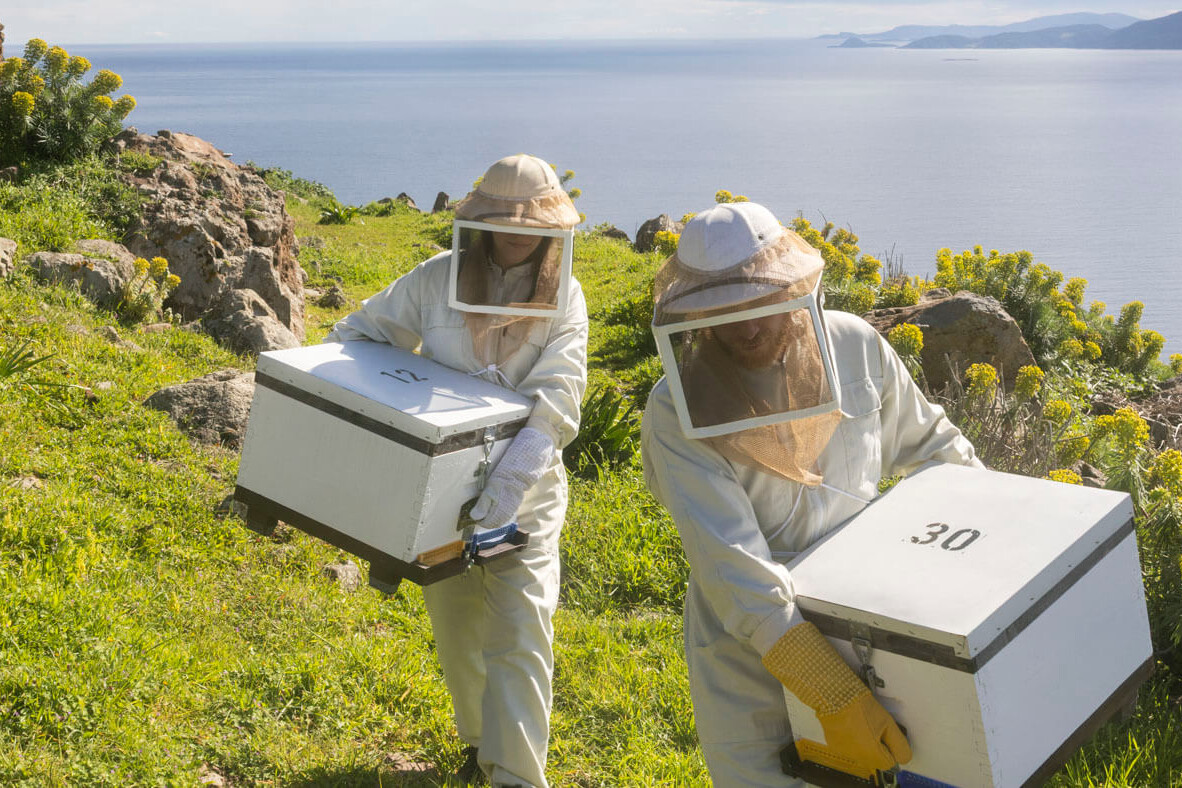
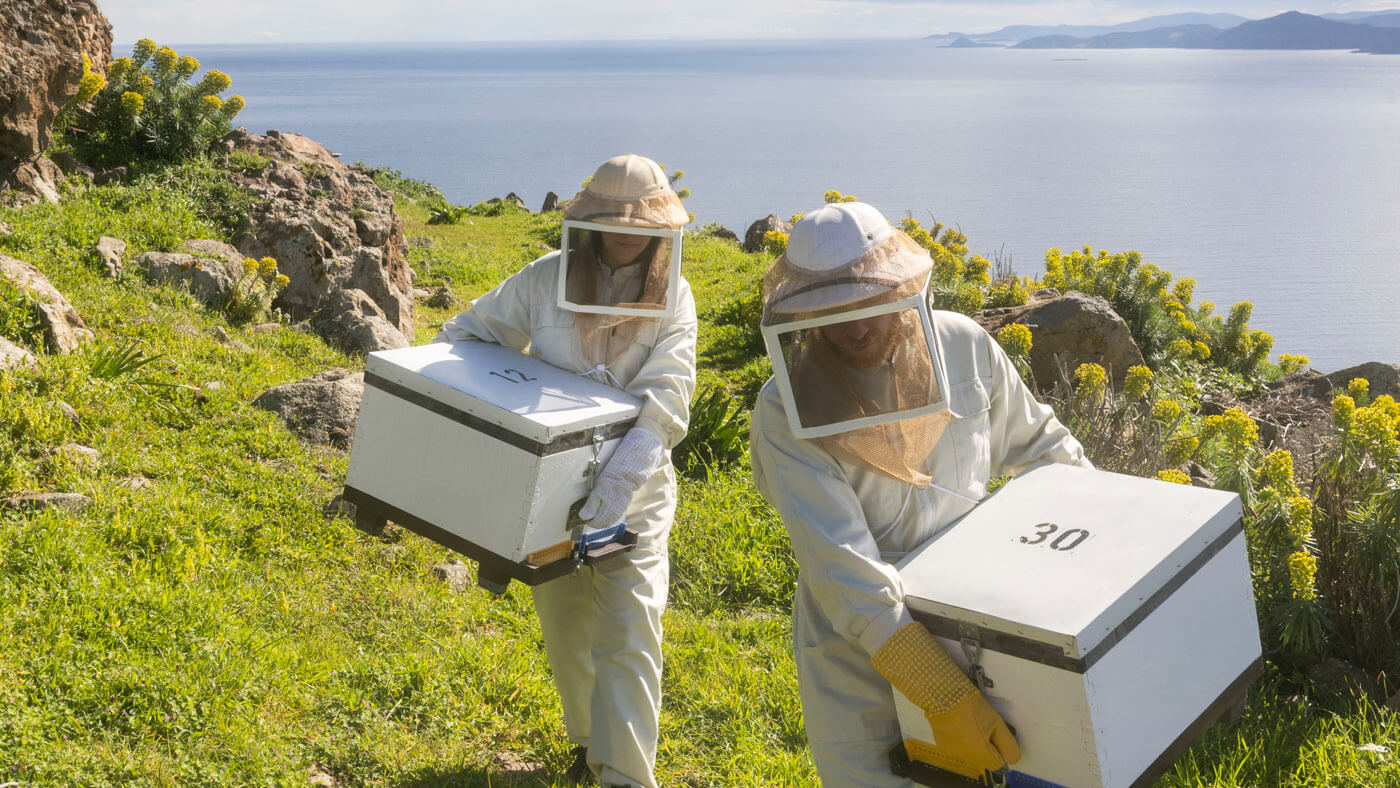
My recent commercial photography project with BLOUIS was designed to capture not only the product but also the entire world that surrounds it. The intention was to create a visual narrative that moves beyond conventional product photography and instead explores the relationship between landscape, people, and craft. The photography reflects this deep connection between product and place. Blends three main elements: space, portrait, and action. Wide environmental photographs introduce the geography of Aegina: open hillsides covered with herbs, dusty paths leading through the vegetation, and distant views of the sea shimmering on the horizon. These landscapes are not simply decorative settings. They are essential ingredients in the story of the honey itself. Within these landscapes, the young beekeepers appear as natural participants in their environment. The portrait photographs aim to capture moments of quiet concentration and dedication. We see them inspecting the hives, preparing the smoker, or carefully examining frames filled with honeycomb. These portraits are intentionally simple and honest, reflecting the calm patience required by beekeeping.
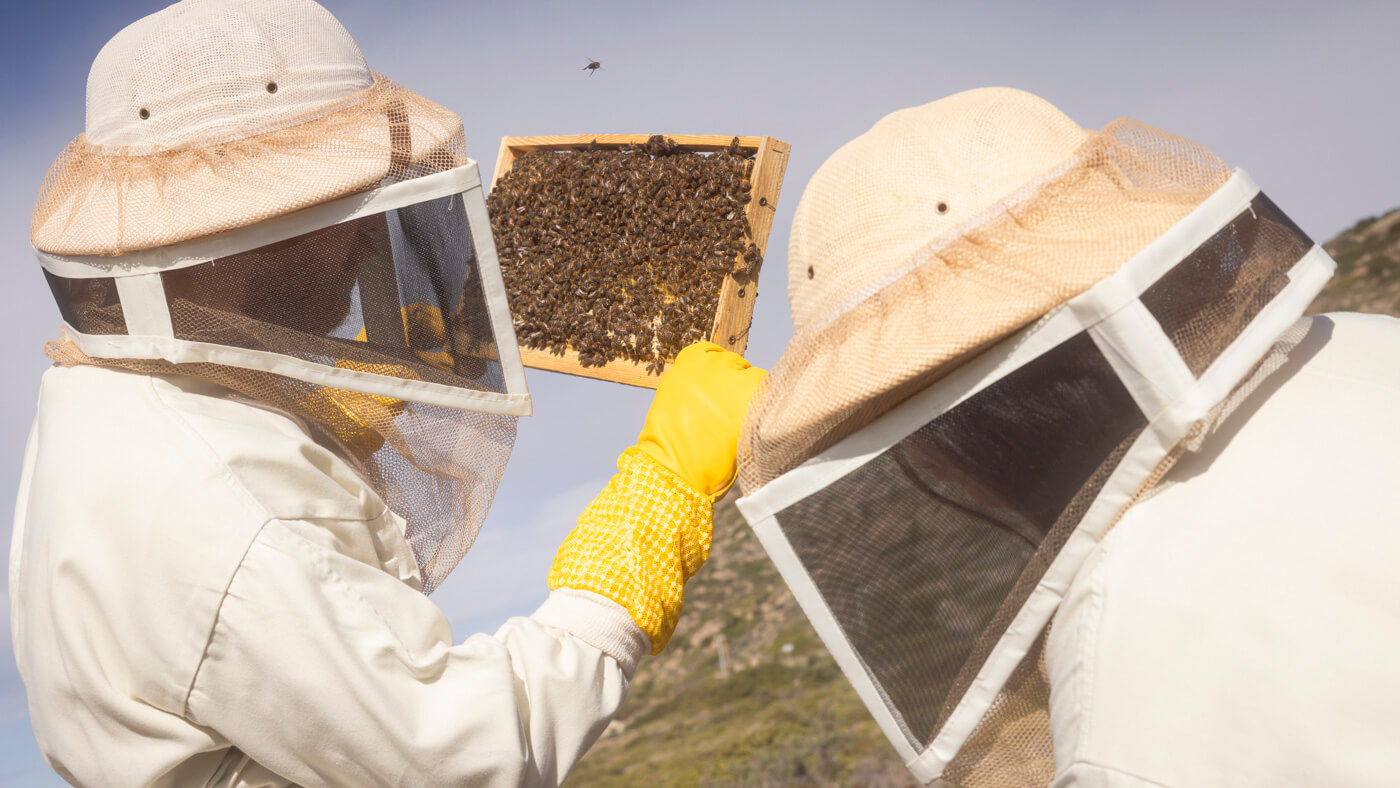
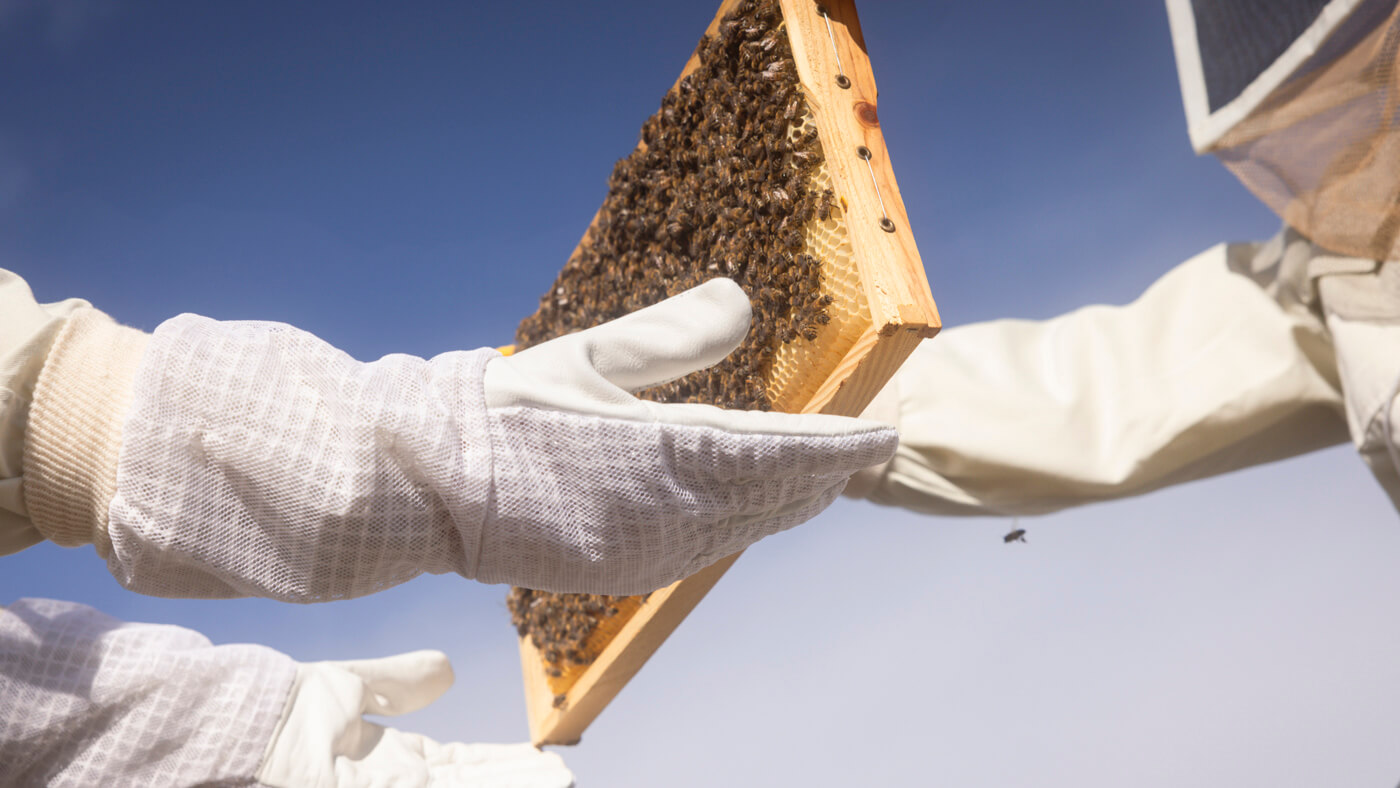
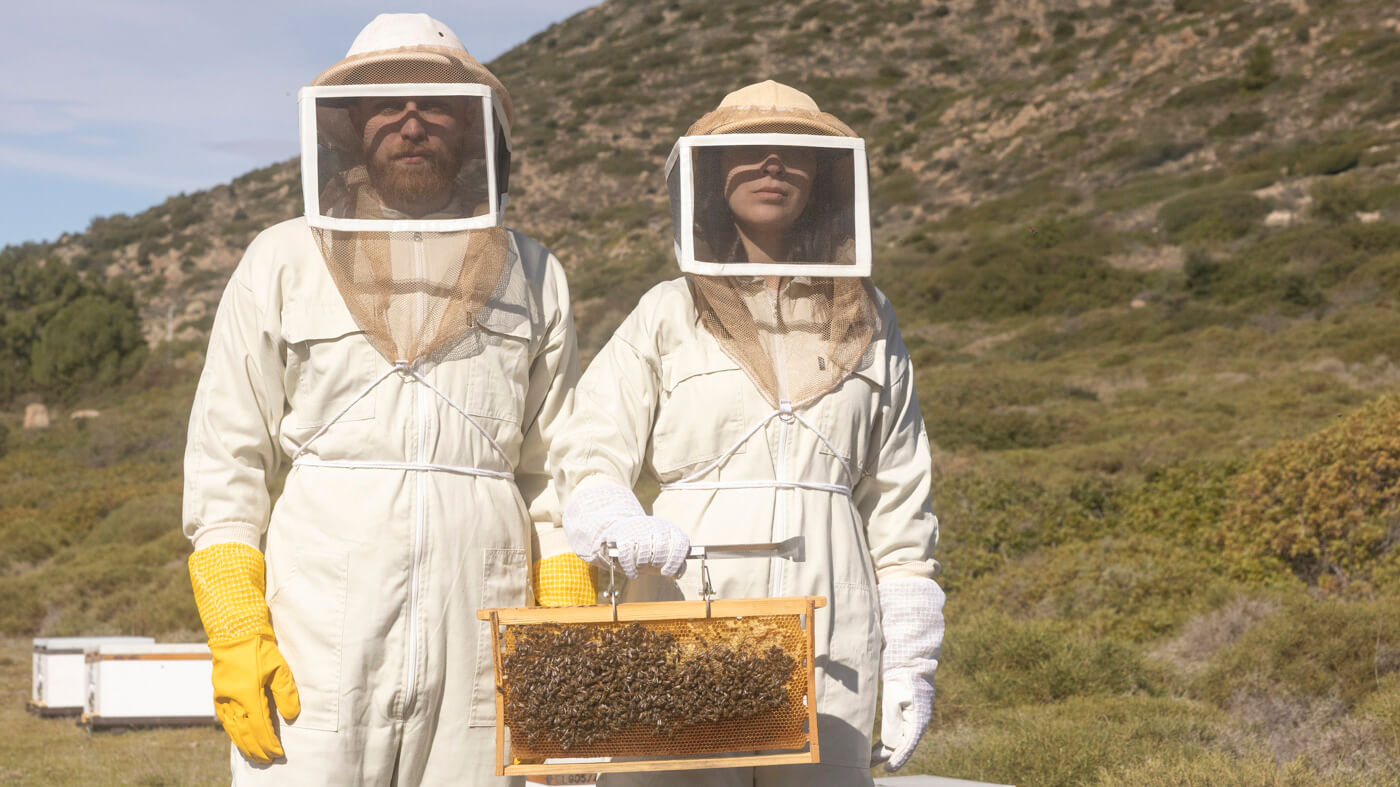
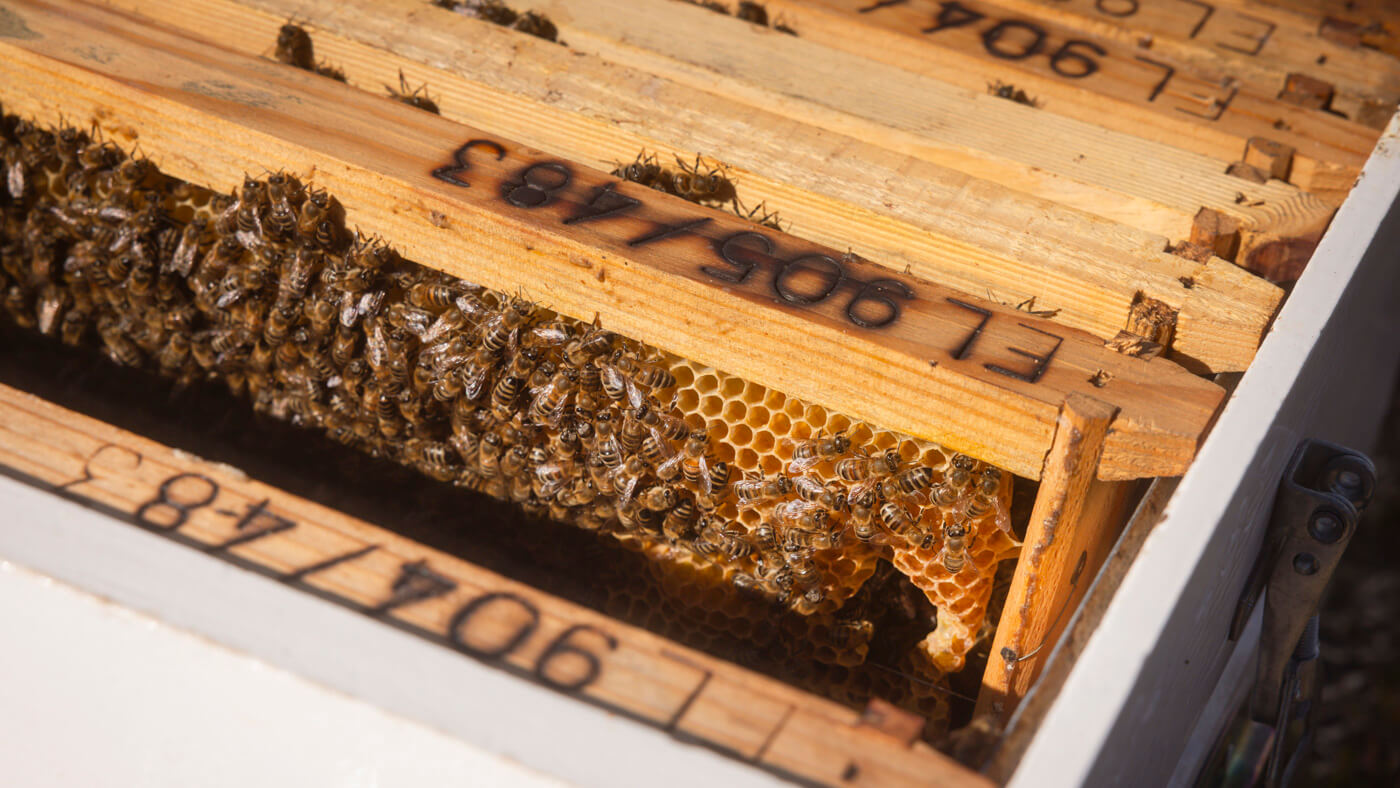
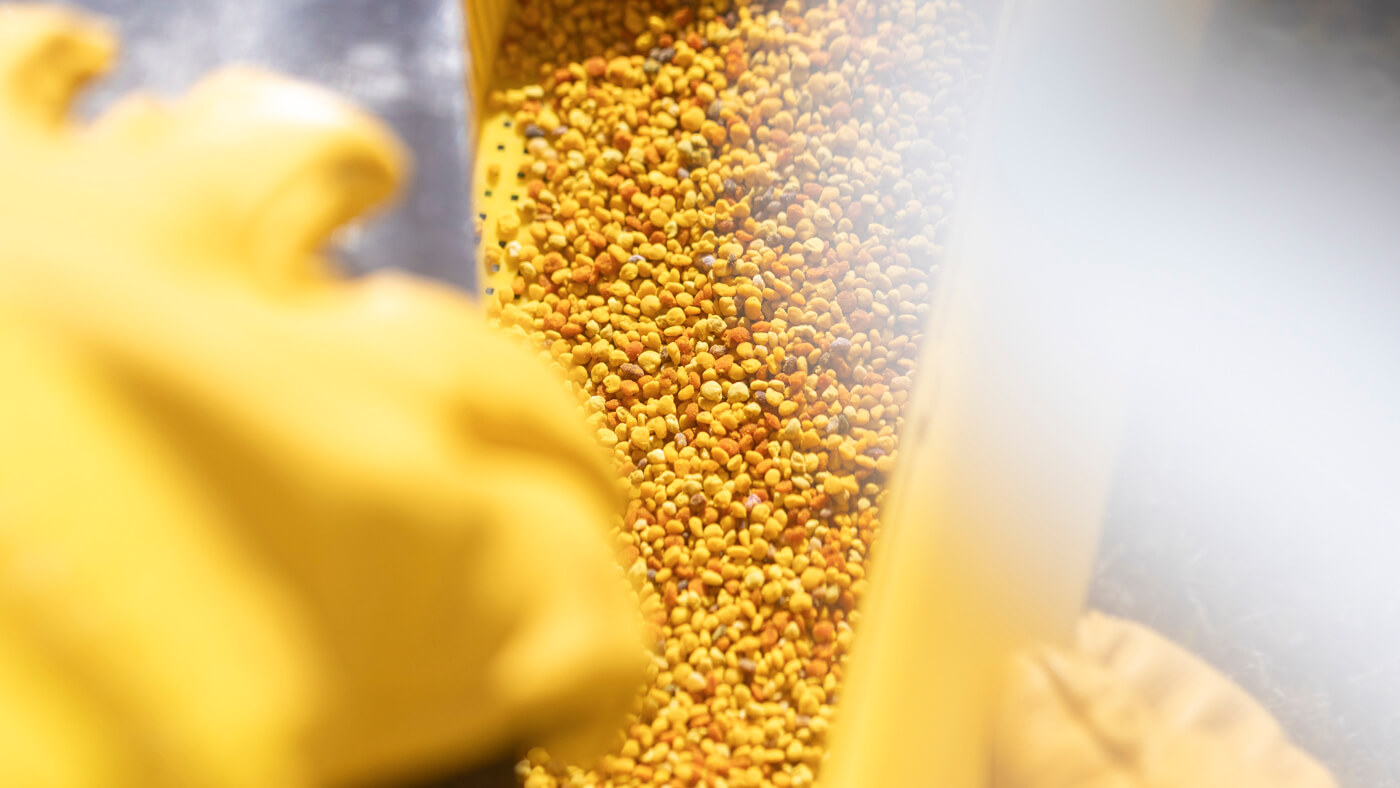
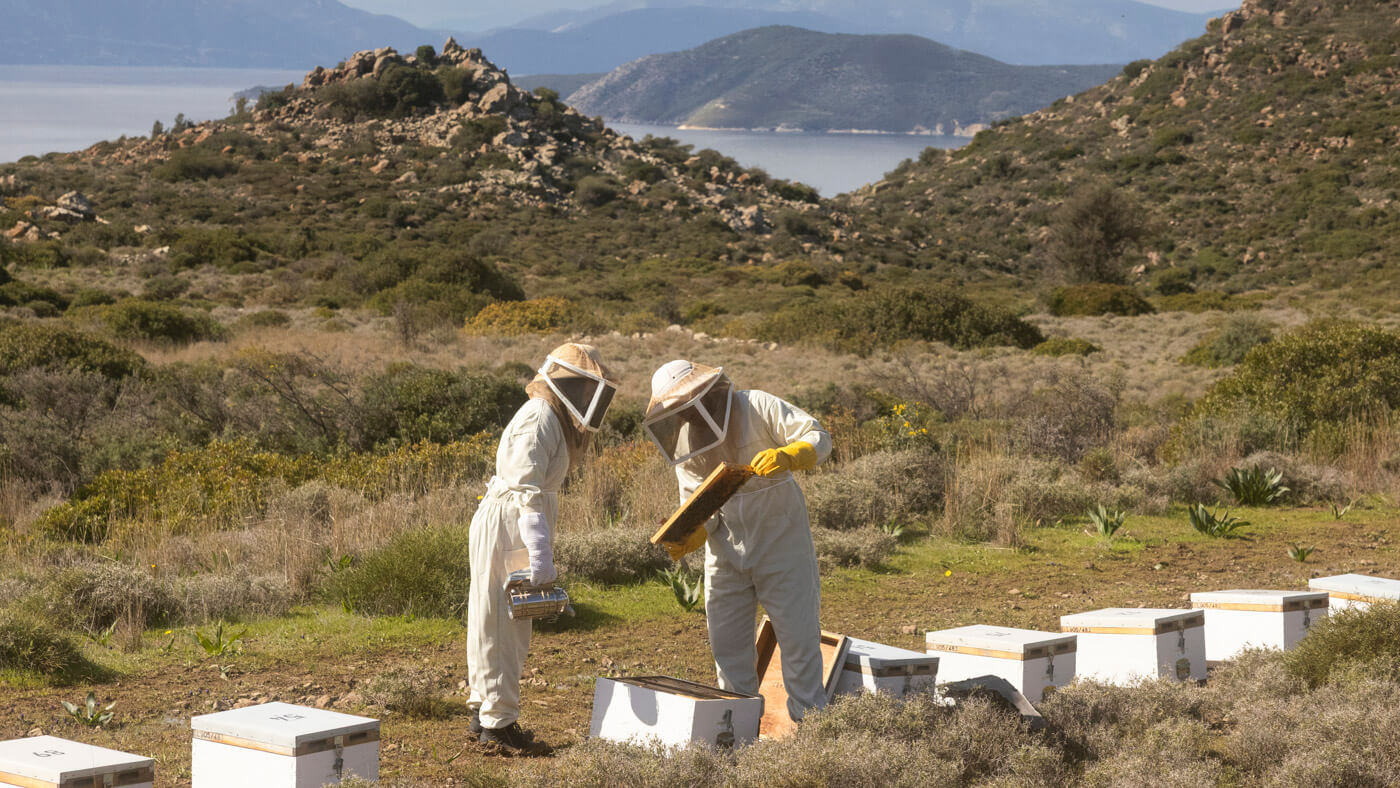
Stella and Leonidas, the couple behind BLOUIS, represents a new generation of producers emerging in Greece today. Young, passionate, and deeply connected to the land, they combine traditional beekeeping knowledge with modern awareness of sustainability and quality. Their work is guided by respect for biodiversity and organic production practices, ensuring that both bees and environment remain healthy.
Despite its small-scale and artisanal nature, Blouis honey has already begun to travel beyond the island. Part of the production reaches gourmet shops in Athens, where it is appreciated by chefs and food enthusiasts who seek authentic Greek ingredients. Another part is exported to Germany, introducing international audiences to the unique flavors of Aegina’s thyme honey.
Through their online presence, including their active pages on Instagram and Facebook, the producers also share glimpses of their daily work with a broader audience.
In this context, the photography project aims to position Blouis not simply as a food product but as a premium artisanal brand deeply rooted in place. The visual approach avoids heavy staging or artificial setups. Instead, the images rely on real moments, natural gestures, and the genuine atmosphere of the landscape.
At the same time, the commercial campaign photographs highlight the human dimension behind the honey. In a world where many food products become anonymous commodities, BLOUIS reminds us that exceptional taste often begins with personal commitment. The images reveal the quiet determination of two young producers investing time, care, and energy into their craft.

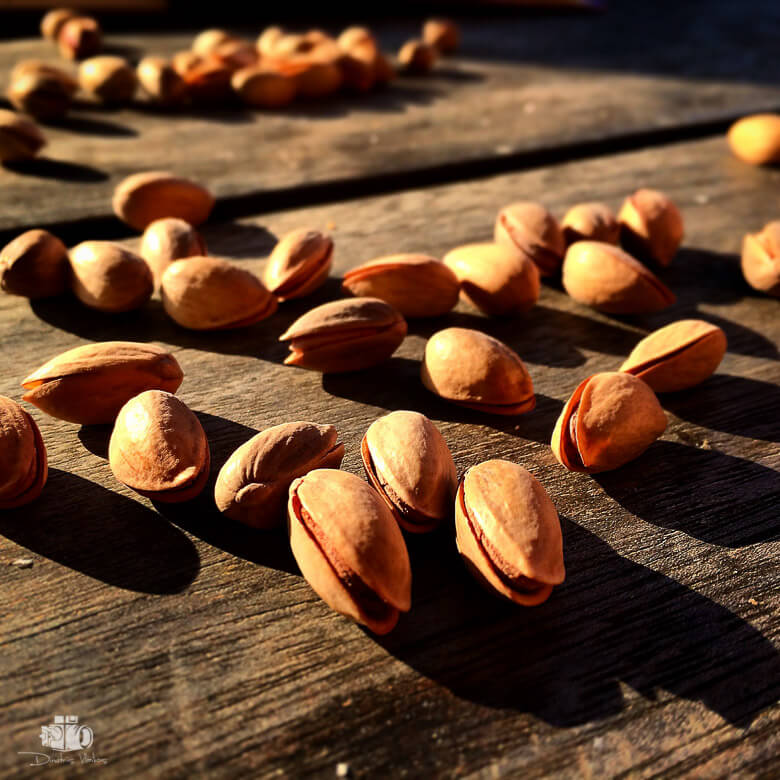
Will Dubai save the pistachio trees?
Two weeks ago, I was invited to photograph a feature story for Kathimerini that touched me deeply—not just as a photographer, but as someone who has spent years working with Greek landscapes and specially in Aegina Island which is my homeland.
Written by Alexia Kalaitzi, the article explores a question: “Will Dubai save Aegina’s pistachios?”
“Getting off the ship at the port of Aegina, one of the first images you see is the queues of visitors forming in front of the kiosks selling the famous Aegina pistachios. The frenzy with Dubai chocolate – a chocolate bar with a filling made of kadayif/kataifi and pistachio – has not left the Saronic island, which has given its name to the most famous variety of pistachio in Greece, unaffected.”
“You have to love the pistachio tree, the other person will not love them as much as you do. He will not be as interested,” said Eleni Kypraiou. The 88-year-old moved permanently to Aegina in 2006, just after completing her career in journalism, and since then she has been dedicated and passionate about her pistachio estate”. I photographed in one of the most emotional moments of the assignment—arms wrapped around a tree she’s tended for decades.” said grower Eleni Kypraiou, who I photographed in one of the most emotional moments of the assignment—arms wrapped around a tree she’s tended for decades.
Nikos Kounadis, supervisor of the Aegina Agricultural Cooperative of Pistachio Producers, was in an empty cold storage room when he told me, “We have nothing left for this year.” He explained that milder winters in recent years—with decreased rainfall and fewer cold days, but more warm and sunny days—have caused the buds of the trees to fall prematurely.
“However, climatic conditions are not the only issue,” said Kostas Peppas, president of the cooperative. He shared that it has been years since a new pistachio tree was planted on the island. “In Aegina, pistachio trees no longer grow – houses do,” the 81-year-old noted, adding that not only is there no longer any room to plant new trees, but existing ones are also being uprooted to build holiday homes, many of which are rented out as Airbnbs.
According to the cooperative’s estimate, since 1980—when the last assessment was made—approximately 30,000 trees have been lost, corresponding to 247 acres of land.
In one of the last images from the story, a building’s concrete frame rises from within a pistachio grove. Construction driven by tourism has led to a significant decline in pistachio trees on Aegina.


Clean Monday
Clean Monday in Aegina: A Seafood Feast at Skotadis for Gastronomos Magazine.
At Skotadis ouzeri in Aegina, alongside chef Periklis Koskinas, we welcomed Koulouma with exceptional seafood meze that capture the essence of the sea.
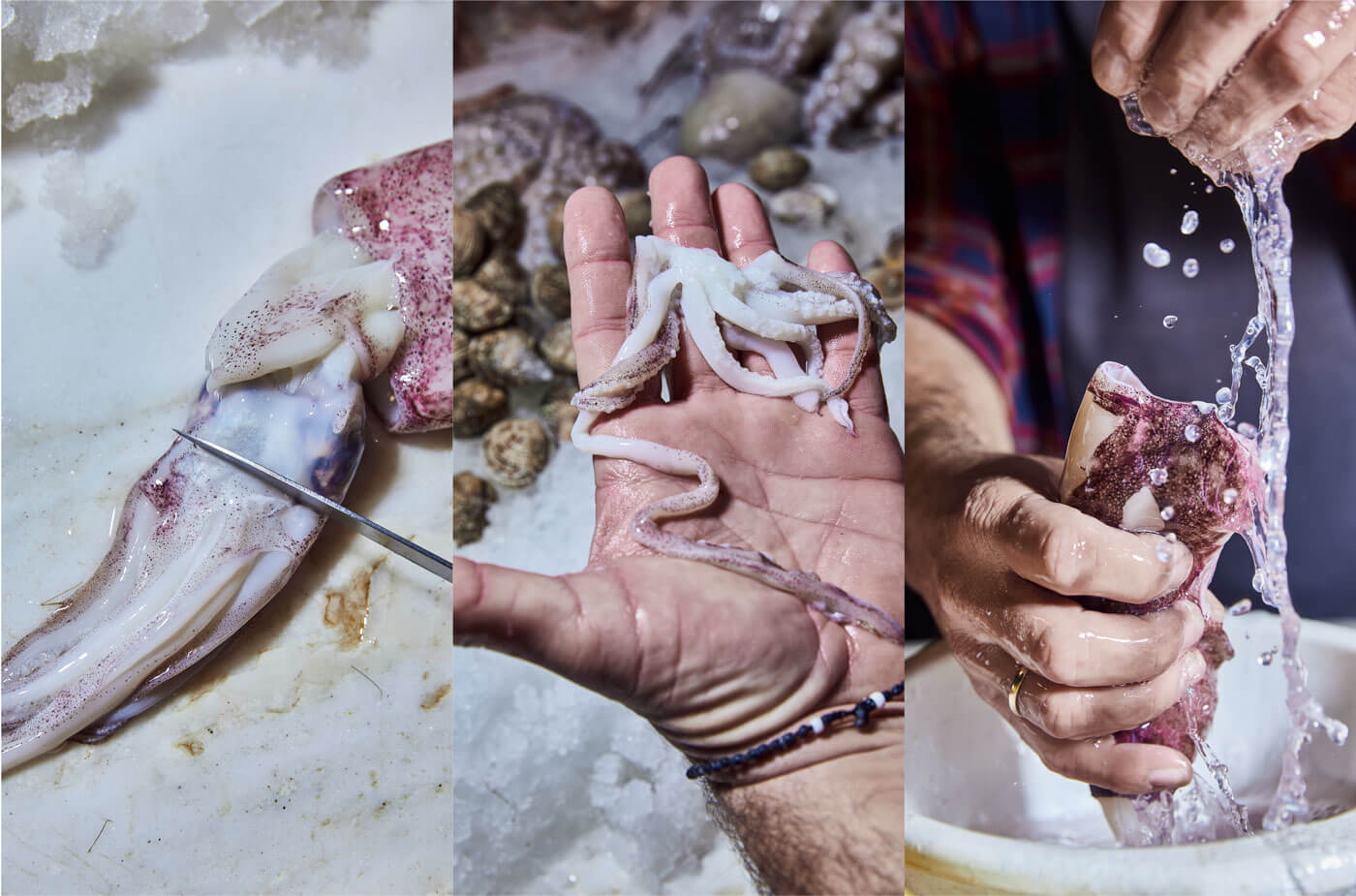
The day began at Aegina’s historic fish market, where fishermen and vendors showcased their daily catch. The market, in operation for over a century, is a hub of fresh seafood. Among the stalls, clams, mussels, octopus, shrimp, and squid glistened on ice, a testament to the island’s rich fishing grounds. Giorgos Lykouris, the owner of Skotadis, guided us through the market, emphasizing the importance of freshness and responsible fishing. “We only take the fish of the day,” he explained.
With baskets full, we walked the short distance to Skotadis, a legendary ouzeri by the sea. Established in 1945 as a café for fishermen, it evolved into an ouzeri in the 1980s, gaining fame under Lykouris’ ownership. Its menu respects tradition while embracing subtle modern influences, offering dishes best paired with ouzo and aged tsipouro from Lykouris’ extensive collection.
In the kitchen, Koskinas, along with Marios Korovesis and Skotadis’ head chef Sotiris Lampadarios, prepared an array of seafood delicacies. Juicy octopus, fried mussels, cuttlefish with spinach, and taramosalata—all crafted with fresh ingredients and a deep respect for seasonality.
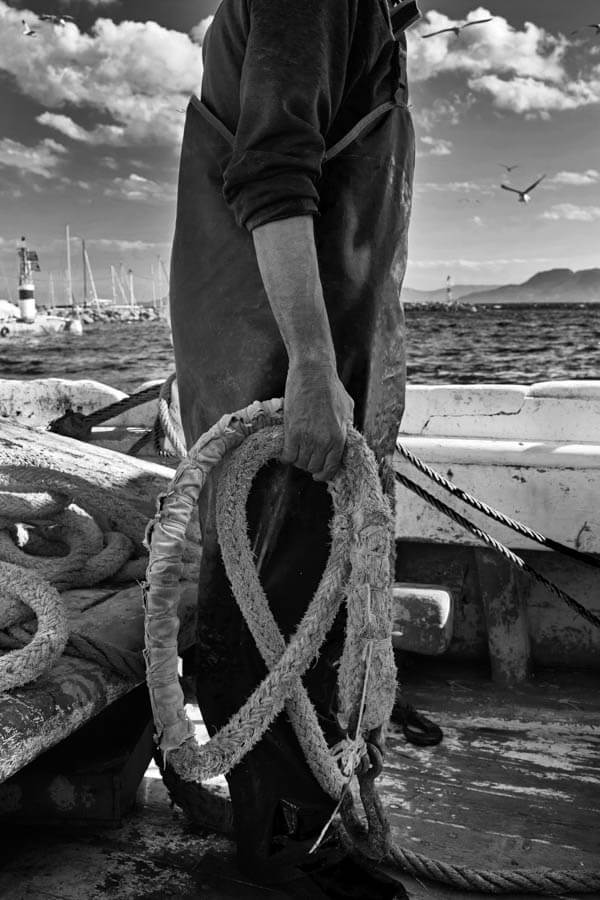
As a photographer, capturing this experience was about more than just food photography. It was about telling a story through images—documenting the vibrant textures of fresh seafood at the market, the hands of the fishermen and cooks at work, the lively conversations over a shared meal, and the stunning coastal landscape that framed it all. Through this series of photographs, I wanted to preserve the essence of Aegina’s culinary tradition, the warmth of its people, and the way food connects us to place and memory.
As the dishes were plated, we gathered at a seaside table, clinking glasses of ouzo and tsipouro in celebration of Koulouma and the simple joy of sharing great food.
Chief Editor Aggelos Redoulas
Text by Nikoleta Makrionitou
Assist Adonis Kavouris
Photo editor Nasia Diamantidi




Panagiotis Marinis
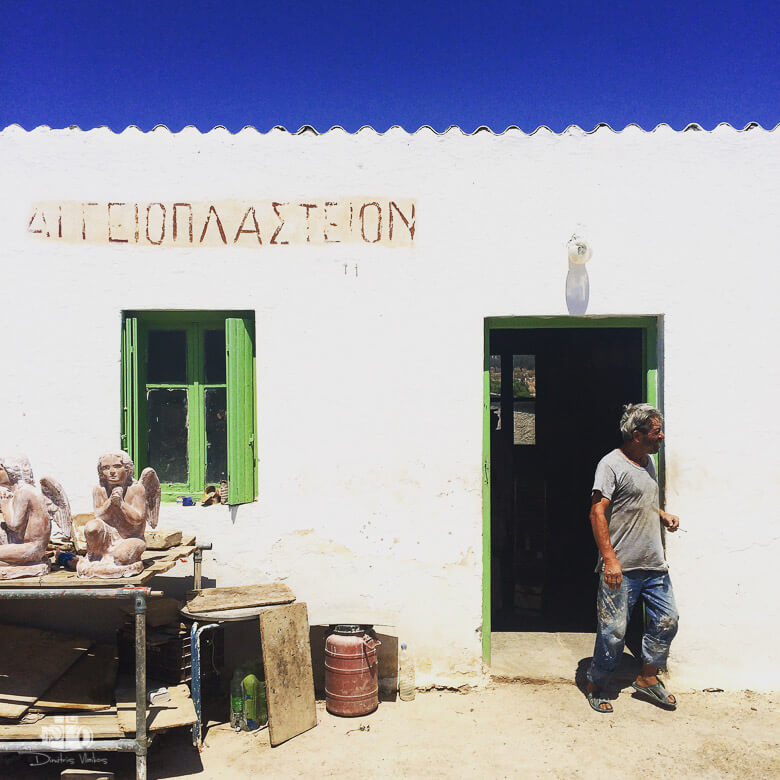
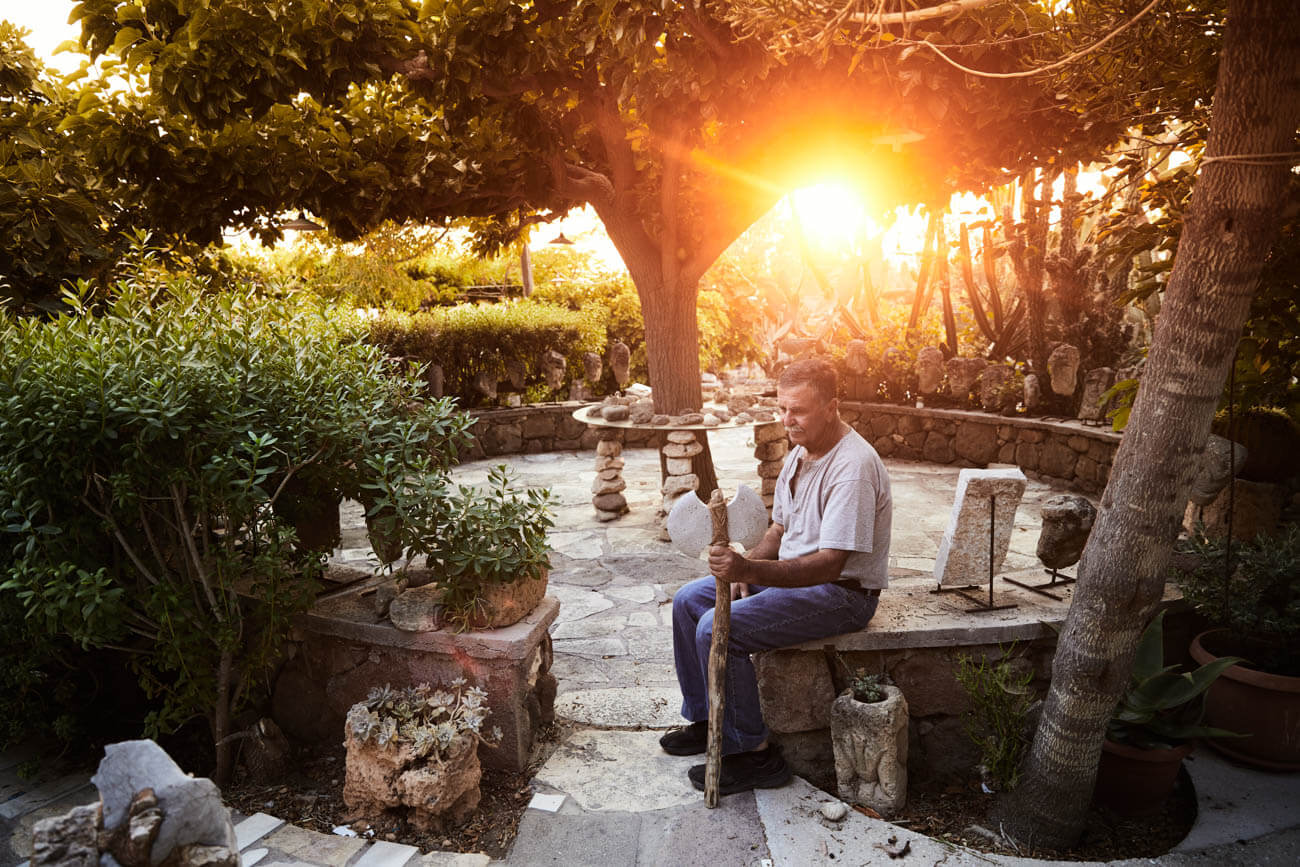
I am sharing portrait photography of a very close friend and a lovely human being, the greek sculptor Panagiotis Marinis. Panagiotis is an example of folk art sculptor that frees the form of his works through his instinct and his connection with nature.
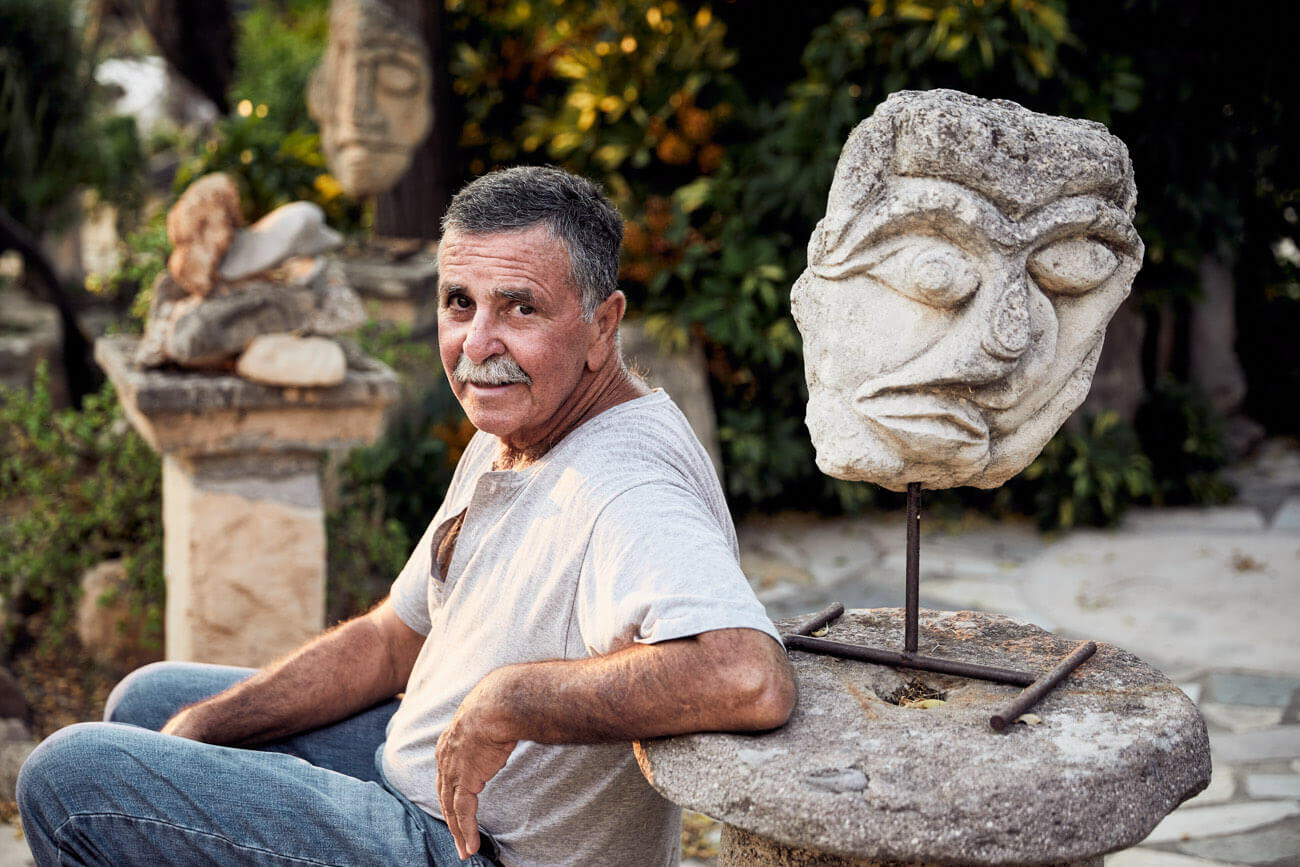

Panagiotis Marinis was born in 1955 in Aegina, where he lives and works until today, remaining a lover of nature and folklore and using stone as the main raw material of his work. His involvement in sculpture began in 1981 with the main stimulus being his works and meetings with Christos Kapralos, as well as the work of Grigoris Maltese. His works can be found in private collections in Greece and abroad, at the entrance of the Aegina Town Hall (work in collaboration with the painter Giorgos Chatzimihalis), as well as in the Cypriot Consulate in New York. He maintains a permanent sculpture exhibition in his Agricultural Garden in Kypseli, Aegina. He has held solo exhibitions in Athens ("The Stone He Knew", Genesis Gallery, Athens 2016 curated by: Iris Kritikou) and in Aegina (Historical and Folklore Museum of Aegina, Markello Tower, Aegina) and has participated in many group exhibitions in Museums, archaeological sites, Foundations and private art spaces in Greece and abroad. His works belong to public and private collections in Greece and abroad.

MYRMIDONES photo-book release
"MYRMIDONES" is the imprint of Dimitris Vlaikos' search on the island of Aegina for the last 20 years.
Focusing on people, the photographer walks a path of observation and understanding of the elements composing the place where he was born and raised.
Light, a key tool in his work, turns into an object of study in terms of its effect on the character, perception, creativity and course of life, both of the island's inhabitants and of himself. Through his lens he wishes to discover how his experiences have become the memory which influences and shapes his choices, his perspective and the aesthetic approach to his work.
The images in the book present moments from the daily life of the inhabitants, portraits of people interacting with their environment, and all those elements that make up the culture which inspires, challenges and embraces the Myrmidons of yesterday and today.



 Credits
Photos © Dimitris Vlaikos
Texts © Despina Giannouli
Text editing: Natassa Ntouma
Translation: Doris Brumma
Design: Dimitris Vlaikos
Film scanning: Filmora Lab
Executive editor: Tasos Papacharalambous
Print: Smart Print
Published by: Dimitris Vlaikos Gallery
ISBN 978-618-00-3754-8
Album features
Edition: 1st edition
Cover: Hardcover
Number of pages: 178 pages
Number of pictures: 89 pictures
Dimensions: 28cm* 29cm
Language: Greek and English
Central distribution : “Lixnari Aegina” Bookstore
Contact details and orders:
e-mail: lixnari@otenet.gr
phone number: +30 22970 26424
(Shipments throughout Greece and abroad)
https://youtu.be/oRceXQTAJTE

Saronic Magazine Cover
As the summer days are passing by and we are welcoming autumn, some of the summer feeling are still fresh and alive to our minds and souls. We cant forget them. It’s the realization of the escape we need. We called it “vacations” it’s one of the reasons to dream, to live and enjoy the precious moments of life. A dive in blue, a new beginning, a sort trip and an unforgettable joy, are the precious words that communicates the Saronic magazine cover. The well-known location of the port of Aegina Island was the ideal spot to capture this great moment of the young athletes arriving with their sups in the port of Aegina Island.


Marinia
The actors Despoina Giannouli and Vangelis Pitsilos performing and act in a 100 years old taverna in Aegina. Marini’s Taverna opens again just for a few shows to give us the feeling and the meaning of Tavernas for the Greek community from 1910 to 1960. Some of the residents of the Taverna was great greek artists like Kapralos, Kazantzakis and Moralis that they produced part of their artistic work living in Aegina and visiting Taverna daily. The following photos are produced for the performers at the yard of the historical Marini’s taverna.